Delogue PLM · 2025

WirHelfen · 2022

Designing Participation: Structuring decisions that feel safe to make

From Complexity to Clarity:
Reshaping Information Architecture for Better UX

Offering help involves uncertainty around time, effort and expectations. I designed the onboarding flow to make decisions feel reversible and manageable, structuring help categories to support quick understanding and reduce perceived commitment.

Role

UX Designer
within a
Volunteer Design Team

Scope

UX Design, Service Design, User Research

Impact

Reduced hesitation during onboarding

Clarified expectations around contribution

Enabled more confident self-selection of help preferences
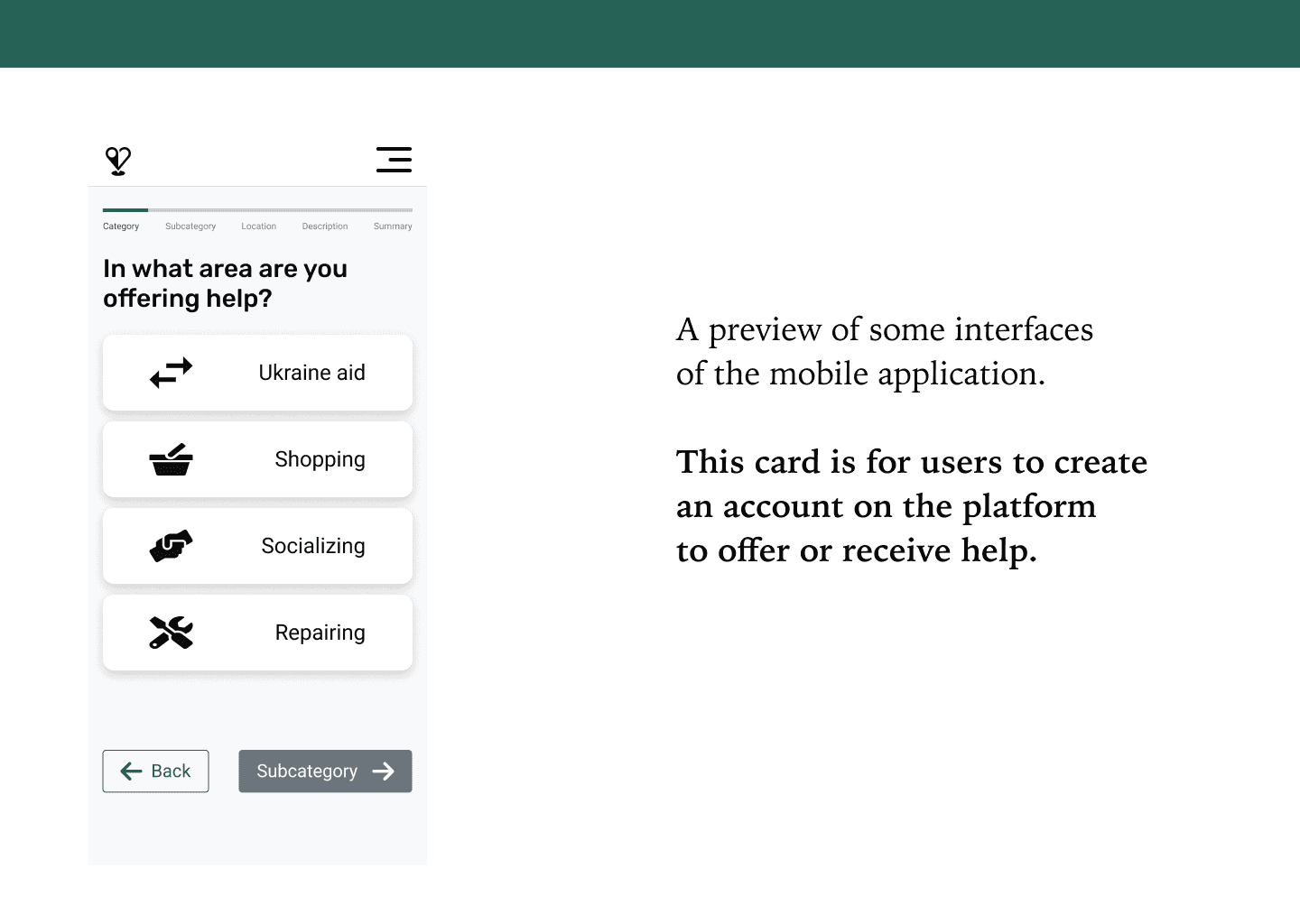
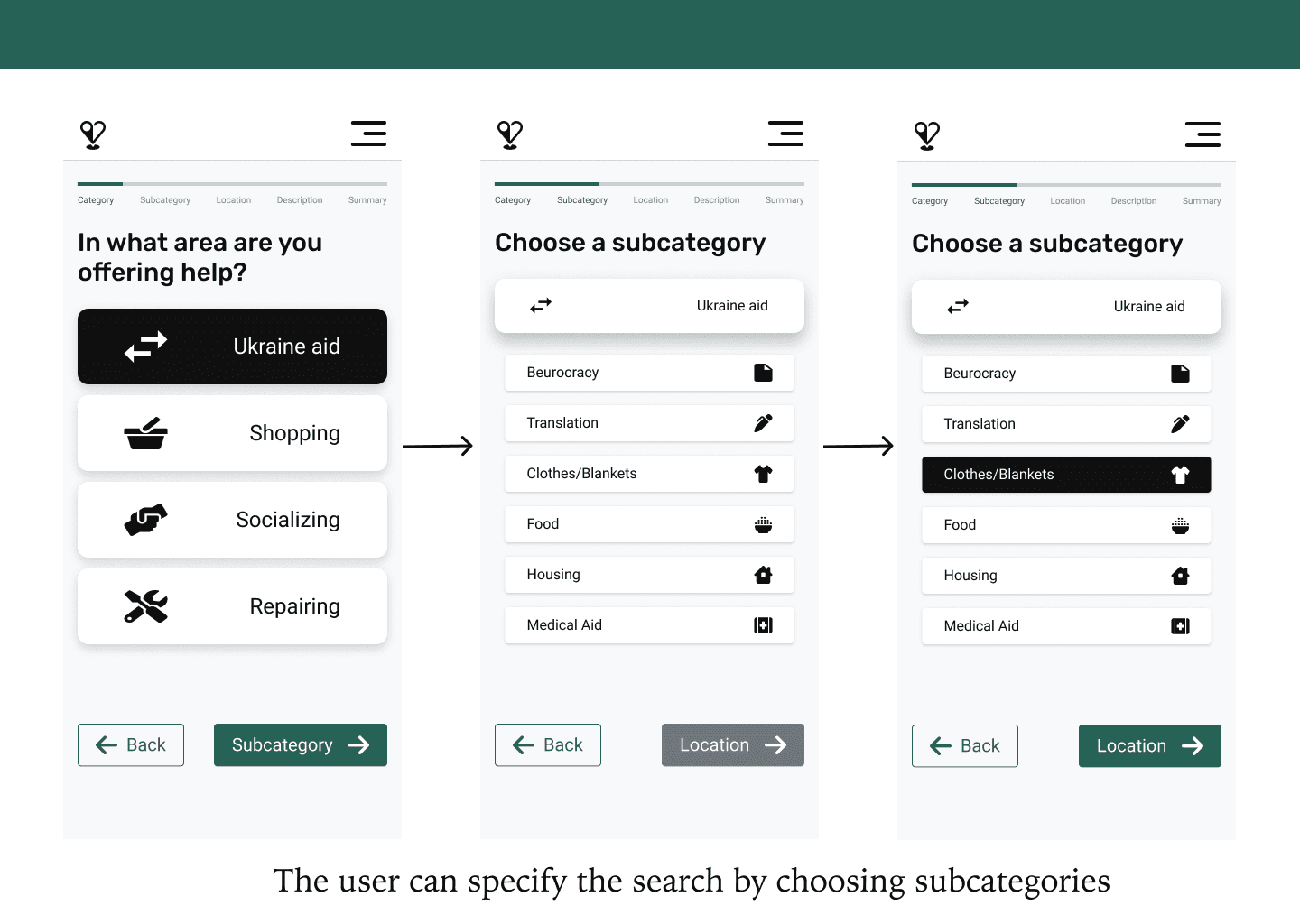
Choosing types of help

Understanding
the status-quo

Users begin by selecting categories and subcategories describing how they would like to contribute. The options are structured to support quick recognition and reduce interpretation effort, helping users understand the scope of possible contributions without feeling overwhelmed. Grouping related types of help creates clarity while keeping the decision lightweight.

Uncovering navigation insights through workflow mapping and JTBD analysis.

Goal: Aligning the findings with our product vision and design principles

- Aligned product direction by collaborating with Customer Success and Sales
- Improved feature adoption through on-site visits and data-driven workflow insights
- Enhanced information architecture by identifying user logic via card sorting exercises.

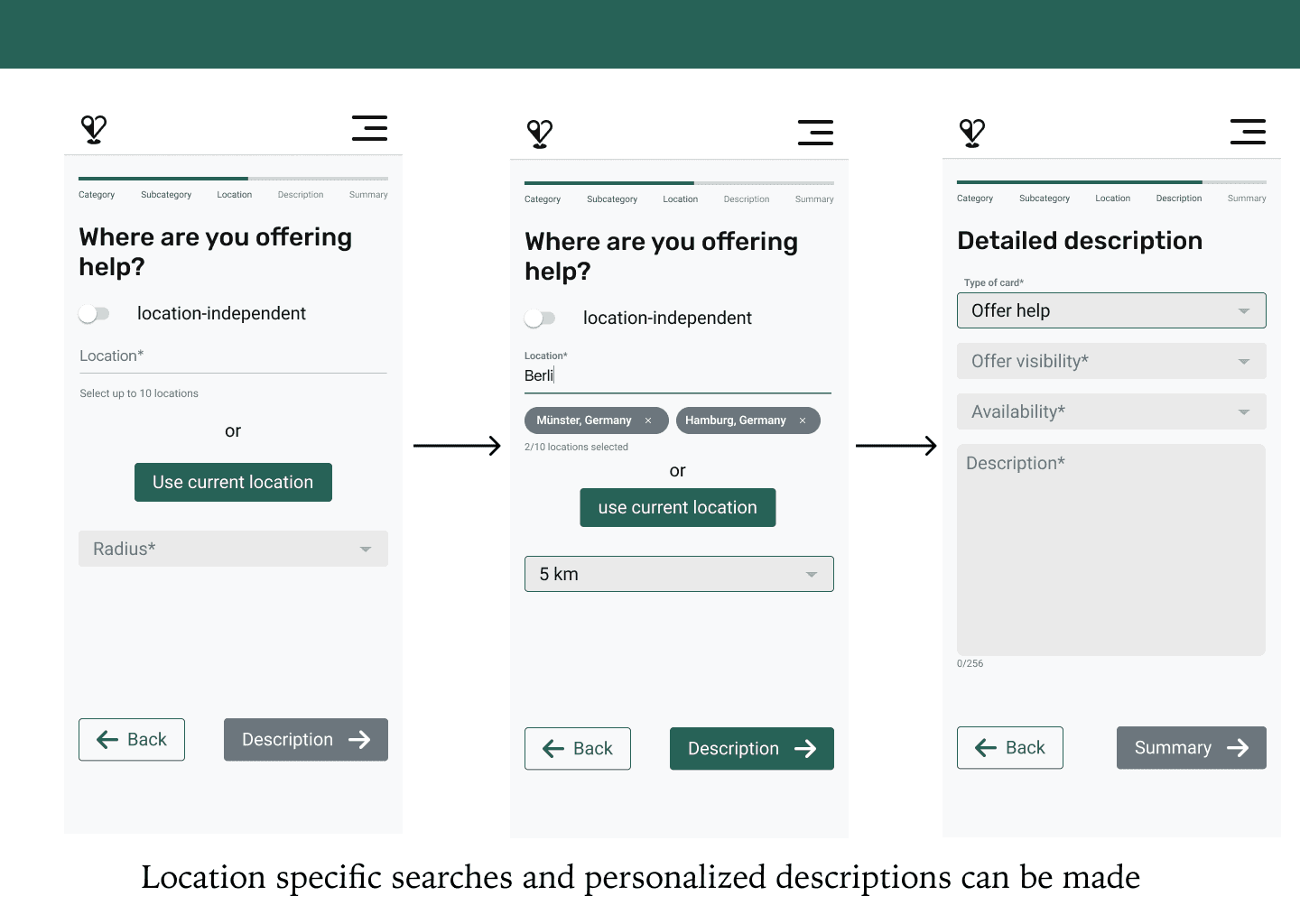
Adding local relevance
and personal context

Understanding
the status-quo

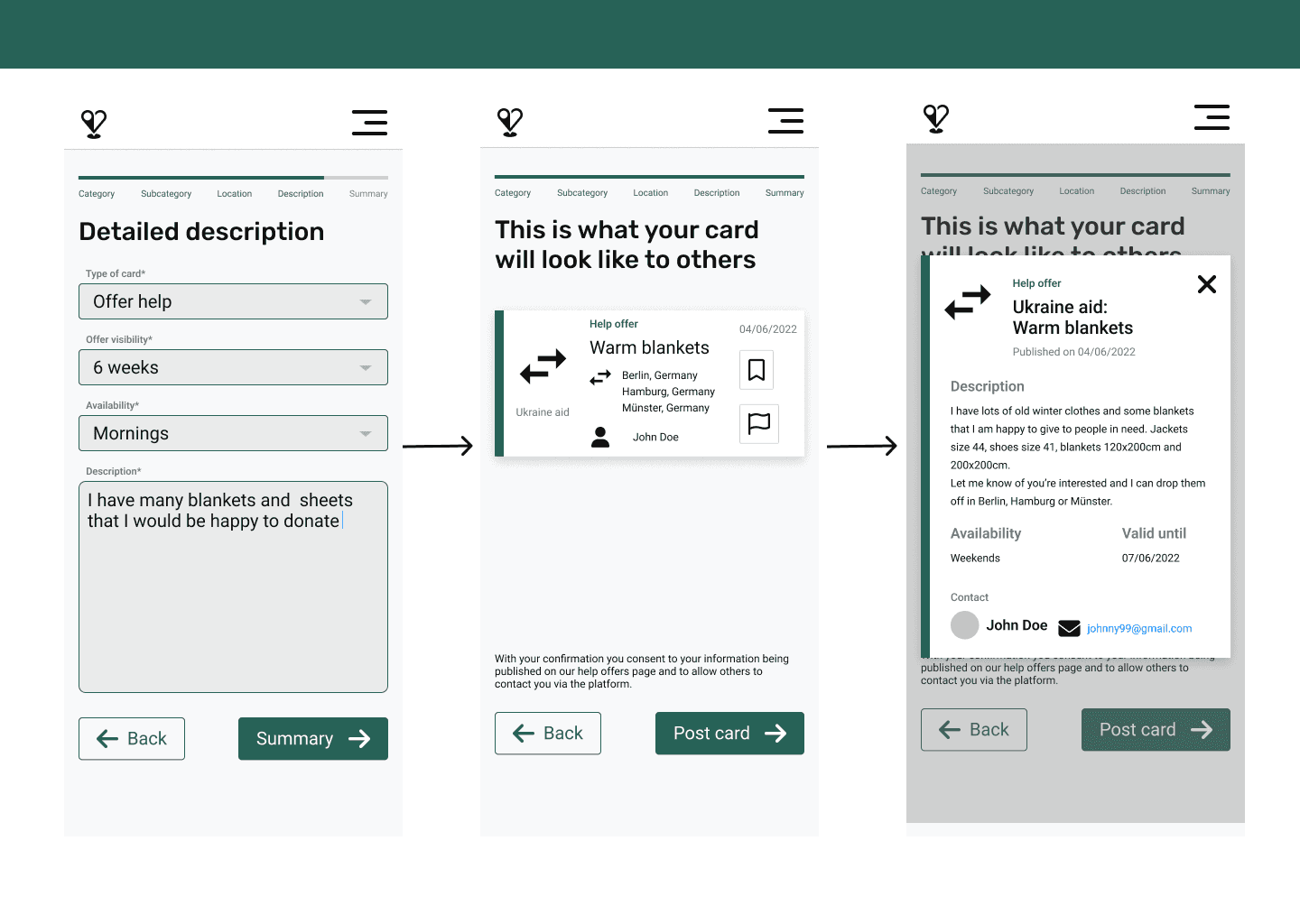
After selecting general contribution areas, users can refine how and where they want to help. Location-based filtering and a short personal description allow users to contextualise their willingness to contribute without requiring detailed commitments. Combining structured filters with open input supports both clarity and personal relevance.

Uncovering navigation insights through workflow mapping and JTBD analysis.

Goal: Aligning the findings with our product vision and design principles

- Aligned product direction by collaborating with Customer Success and Sales
- Improved feature adoption through on-site visits and data-driven workflow insights
- Enhanced information architecture by identifying user logic via card sorting exercises.

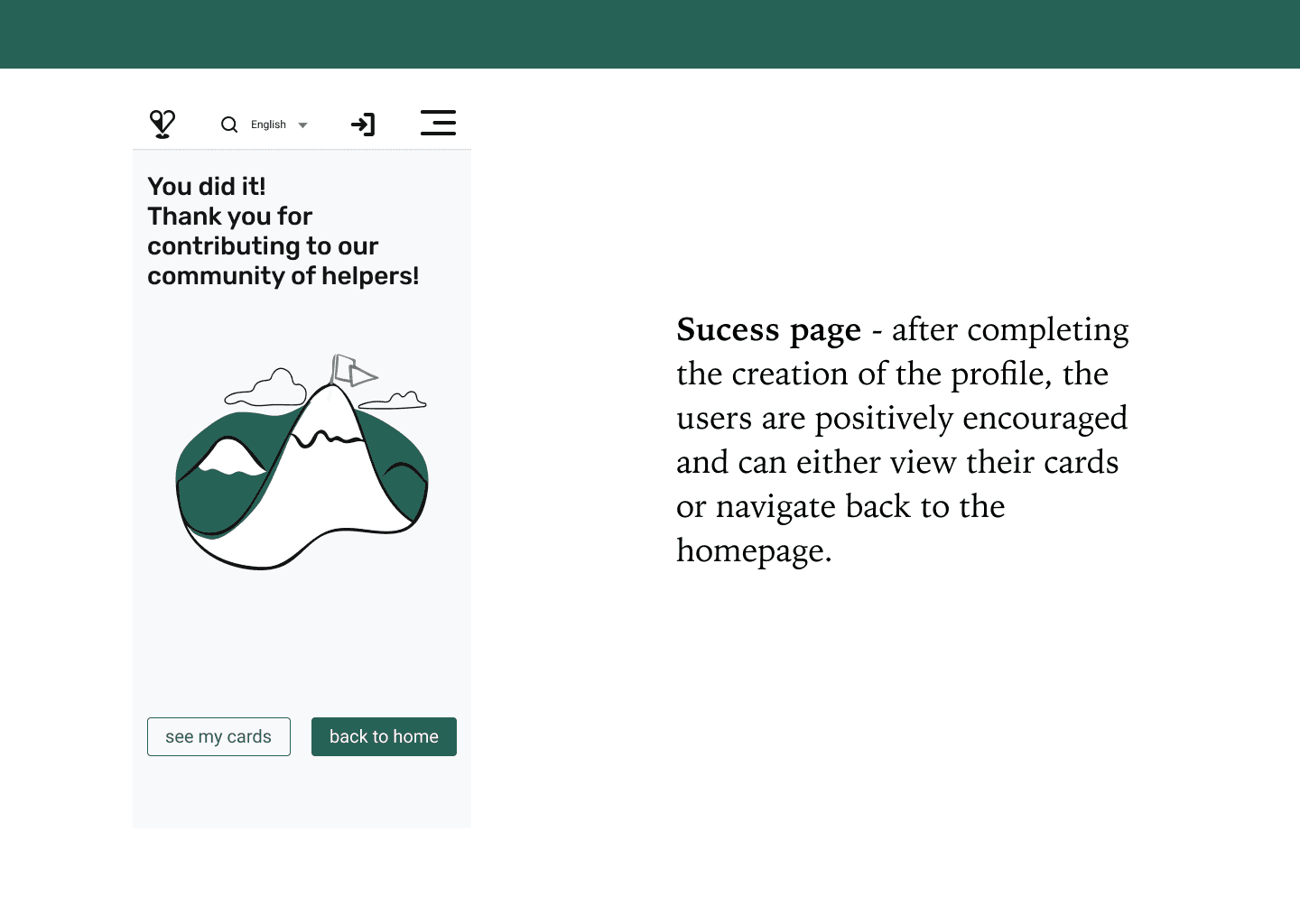
Confirming participation

Understanding
the status-quo

The success screen reinforces the contribution and clarifies next steps, helping users feel confident that their preferences are communicated clearly. Transparent confirmation reduces uncertainty and supports trust in the platform as a reliable coordination space.

Uncovering navigation insights through workflow mapping and JTBD analysis.

Goal: Aligning the findings with our product vision and design principles

- Aligned product direction by collaborating with Customer Success and Sales
- Improved feature adoption through on-site visits and data-driven workflow insights
- Enhanced information architecture by identifying user logic via card sorting exercises.

key insight

"People are more willing to offer help when the decision feels specific and adjustable. Breaking down contribution into small, understandable choices reduces perceived commitment and increases likelihood of participation."

Uncovering navigation insights through workflow mapping and JTBD analysis.

Goal: Aligning the findings with our product vision and design principles

- Aligned product direction by collaborating with Customer Success and Sales
- Improved feature adoption through on-site visits and data-driven workflow insights
- Enhanced information architecture by identifying user logic via card sorting exercises.

Charlotte Kleckers

Copenhagen